

It’s a fact shared by many people right now: politics is frightening. Foolish and partisan stances, wars and the endless stream of commentary on social media, attacks on the fundamental principles of law and democracy, the blindness of some toward their leaders… many of us are wondering what tomorrow will bring and whether it still makes sense to believe in social progress.
By social progress I mean the capacity that people in a democracy have to evolve together, to talk to one another, to help those in need, to create wealth and distribute that wealth as fairly as possible. I also mean the capacity to make, in the sense of building, which I contrast with this very contemporary fixation on undoing, something you find among extremists but also, in a certain way, among followers of all kinds who simply consume without questioning the consequences of their actions, feeding a morbid obsession with optimization and enrichment, hollow and individualistic motivations that, I believe, should be judged more harshly. With How to get lost I want to give a voice to those who make. They are the ones who should be valued, because they are courageous, compelling, and push back against the standardization of the world through their actions.
At a time when fascism is defined in part by its contempt for thought, and as important elections are approaching in France (the municipal elections in March 2026 and the presidential election the following year), as well as in the United States (the midterms in November 2026), I thought it was necessary to step in a bit and give the floor to women and men who are genuinely working to shape political ideas, I thought it was necessary to try to bring a bit more substance.
So I’m starting a series of political interviews (interviews I’ll try to make as beyond party lines as possible) and, for this first conversation, I asked the senator from Moselle and president of the Federation of France’s Regional Natural Parks, Michaël Weber, to answer my questions.
You describe yourself as a socialist. What does that mean in 2026?
I think calling yourself a socialist in 2026 matters more than it did when I first joined in 1997. Today, the fundamentals are under attack. Inequality is thriving, society is fracturing, distrust is everywhere, volunteerism is breaking down, the social glue in our villages is disappearing. In short, the very idea of living together is being called into question. I feel we are reaching the height of a long process of social disintegration, driven in particular by individualism and an every-man-for-himself mentality.
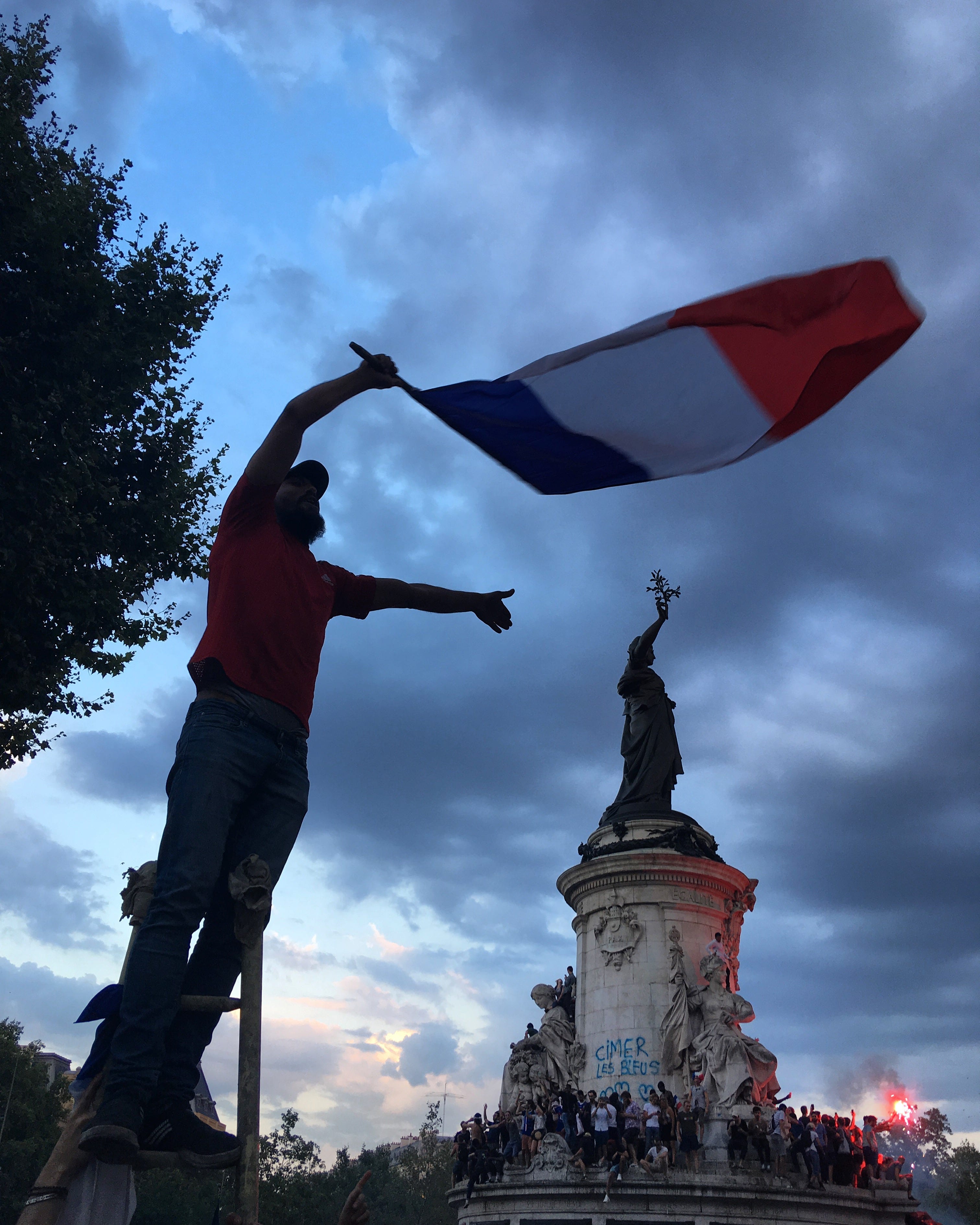
To remind people what has made France unique since the Enlightenment is, to me, what it means to be a socialist. Believing that human intelligence must remain more important than artificial intelligence is also, in my view, a socialist position.
Stunned by all the excesses and provocations of the American government on the international stage, and by the growing strength of far-right and far-left parties in France, it feels difficult, at the start of this year, to hold on to hope in social progress. Could you give us a substantive reason to keep believing in it?
I think the social contract is written deep inside every French citizen. People are torn internally between their attachment to France’s history, built on order and symbols, and their need for freedom and democracy.
After the fall of the Berlin Wall in 1989, it felt as though social progress had reached its peak. Everyone assumed that abortion rights, the abolition of the death penalty, eventually same-sex marriage, and perhaps one day surrogacy, would naturally be accepted in France.
But the conventional narrative you now hear across the country is that there is “too much social policy.” That catch-all word has become the glue of reactionary thinking, where “social” is equated with wokeness, unemployment, disability, taxes. A word that once symbolized postwar France rebuilding itself has come to express the country’s decline.
How can we reassure ourselves? Simply by remembering that, in the end, what builds society, what gives meaning to humanity, is what ultimately prevails.
In soccer, players are often asked to name their “ideal eleven,” choosing whoever they want, regardless of eras or timelines, to create their perfect team. If you had to assemble your “ideal government,” who would you appoint to Culture, Education, the Interior, Foreign Affairs, Agriculture, and so on?
There is no ideal eleven, so there is no ideal government. I can’t really answer that question. Ideally, I would appoint great historical figures who have shaped our times.
All right, I know there’s no such thing as an ideal government, but what would be fun would be to place major historical figures who have marked our times in those different roles, regardless of whether they lived at the same time.


Okay then. I would appoint, at the Ministry of Culture, Alexandre Soljenitsyne.
At the Ministry of Education, Christiane Taubira.
At the Ministry of the Interior, Simone Veil.
As Secretary of State for Foreign Affairs, Winston Churchill.
At the Ministry of Agriculture, Mariama Sonko.
At the Ministry of Defense, La Fayette.
At the Ministry of Justice, Robert Badinter.
At the Ministry for Gender Equality, Simone de Beauvoir.
And for the Environment… myself.
You were elected mayor of your village in Moselle in 1995. At the time, you were the youngest mayor in France. Emmanuel Macron, Jordan Bardella or Donald Trump have, to my knowledge, never been elected locally. What might that have given them?
One quality that neither of them has at all: the ability to listen. Being mayor of a village means knowing how to spend an entire Sunday at the temporary bar during the village fair. That’s where real life unfolds. You meet the sad, young people figuring themselves out, farmers watching the weather, wives worried about their families, a single mother struggling, a father rambling after drinking too much. And for all of them, politics means nothing. It represents everything they dislike. Politics is like Macron’s gaze: veiled, almost empty of feeling, coldly tactical, devoid of remorse.
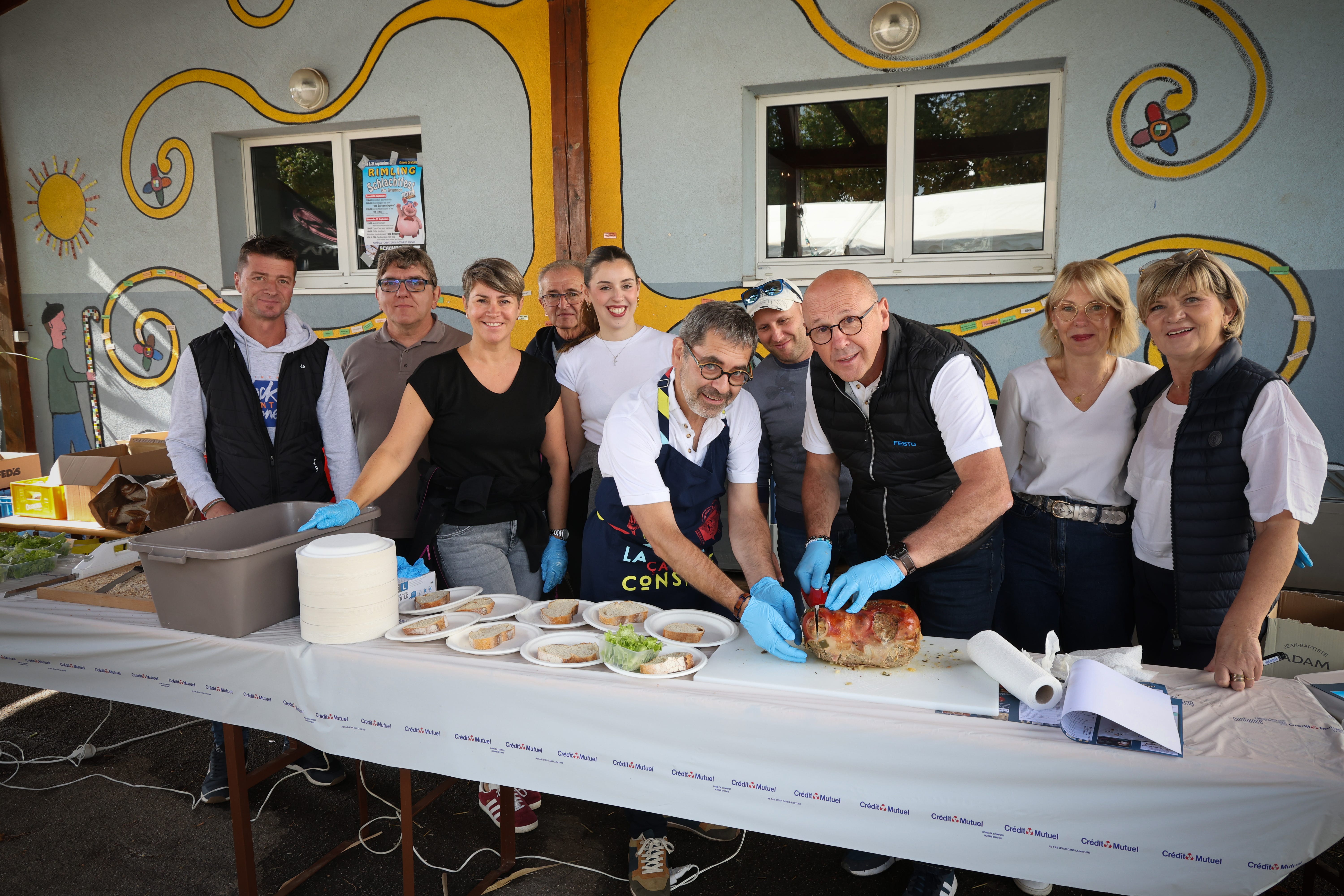
My experience as a local elected official is not just what I learned at the time of my election. It remains a reservoir and a source of renewal. The greatest threat facing us is losing that privileged and trusting bond with our fellow citizens. Even as a senator, I still serve beers at the village fair. I listen, I observe, and I reassure myself that the very foundations of our Republic have not changed. It takes very little to regain confidence in the future.
Macron and Bardella have no sincere connection with the people. For them, the people are merely a means. With Macron, people have understood that. With Bardella, they are about to discover it. That final hope, soon disappointed, could trigger a sudden and possibly violent reorganization of political life.
Municipal elections are two months away and I feel like nobody is really talking about them, except perhaps for Anne Hidalgo’s succession in Paris. In your view, is there an erosion in the relationship between citizens and their representatives?
No, not with mayors. Having run many elections, I think municipal campaigns are actually very much alive locally. I’m curious to see how many candidates there will be compared with 2020, but I almost feel there are more, even though I expected the opposite.
By contrast, the election everyone is already talking about is the 2027 presidential race. Around me, more and more people are wondering what they will do if the choice comes down to the far right or the far left. I don’t know whether to ask how we got here or whether we’re really there already.
The constitutional reform introduced by Lionel Jospin (which reduced the French presidential term from seven years to five and aligned the presidential and parliamentary calendars to limit periods of cohabitation and strengthen governmental stability Q.E.D.) was a mistake. Reducing the presidential term to five years and reversing the electoral calendar weakened parliamentary elections. Since 2002, the very next day after the second round of the presidential election, the main political question has been who the next candidate will be. Political leaders found that amusing until about 2010. Now they realize it’s a trap that weakens them.
If everyone is focused on the next presidential election, it’s for two reasons: 35 percent of French voters want to vote for the candidate of the far right in the first round, and 80 percent fear for the country’s future. France does not want the far right in power, but our fellow citizens no longer know how to escape this trap of voting against someone rather than for someone, and ending up with a president who believes he was elected by support when in fact he was elected by rejection of the other candidate.
The French love the presidential election, like true heirs of the old monarchy, but the presidential election disappoints them. The relationship between the French and the presidency is a misunderstood love affair.
The United States are governed by the selfishness, vanity, vulgarity, and cruelty of one man and his court of courtiers. I’m not mentioning his name because, like many people, I’m exhausted by the space he occupy and by the media saturation they have turned into a global harassment strategy. Are we in France safe from a similar scenario? How can we avoid it?
We are not safe from it. Why are there so many comedians in politics? Loudmouths have taken power everywhere. Only the permanent buzz matters. That evolution has struck me even locally. When I entered politics, as one might enter the clergy, during official speeches lawmakers always delivered real substance. Their speeches had meaning. They offered political analysis.
By the mid-2000s, it became unfashionable to show differences. Lawmakers started making jokes, talking about their youth on the soccer field, repeating their grandmother’s witty remarks, describing funny anecdotes. We no longer dare to do politics seriously.
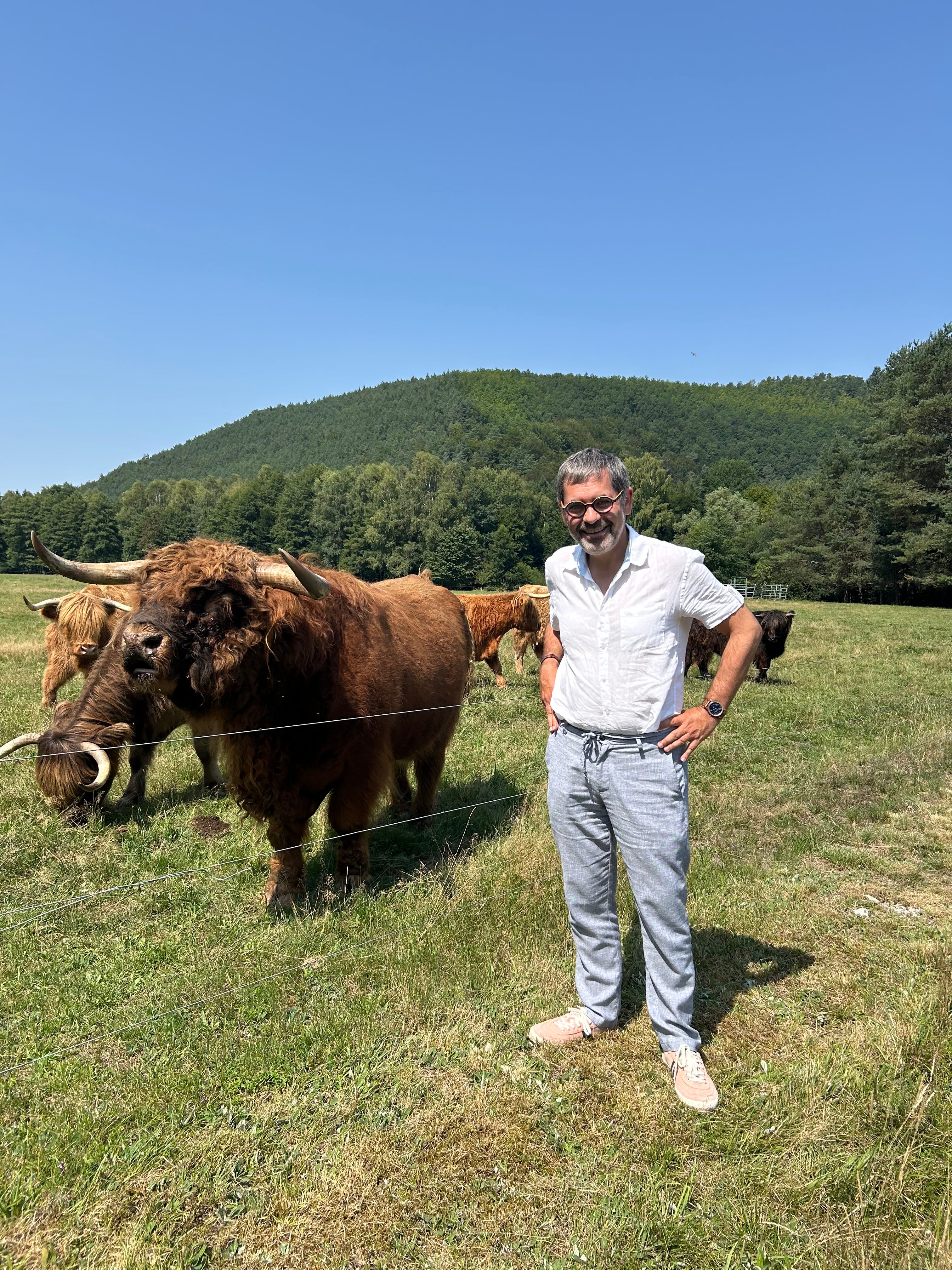
To avoid this, we must restore the meaning of politics, debate, the confrontation of ideas, civic education. Our country once loved politics, but it is losing its political culture because it is no longer sufficiently taught in schools. Talking about politics is already practicing politics.
And we must also recreate real political divides. Left and right are not the same, contrary to what Macron claimed in 2017. When political divisions disappear, extremes take power.
You are now a senator for Moselle. You regularly work with colleagues from other political parties. From the outside, especially since Macron dissolved the National Assembly, it feels like parties are retreating into themselves. Do you believe dialogue between parties is still possible? Was it ever? Is it harder or easier than before?
Dialogue within the left bloc is necessary, and the same should apply on the right. But discussions between the two blocs should be limited. If a political reorganization is to take place, and if we want to build a democracy with real momentum that is not crushed by a single dominant party, each bloc must be internally strong, made up of parties that are compelled to negotiate among themselves. Macron’s dissolution was not, in itself, something meaningful. It made no sense. Because the French did not understand the reasons for it, it has only produced instability. This question alone would deserve a much longer answer.
Which book would you recommend to someone who wants to deepen their political culture?
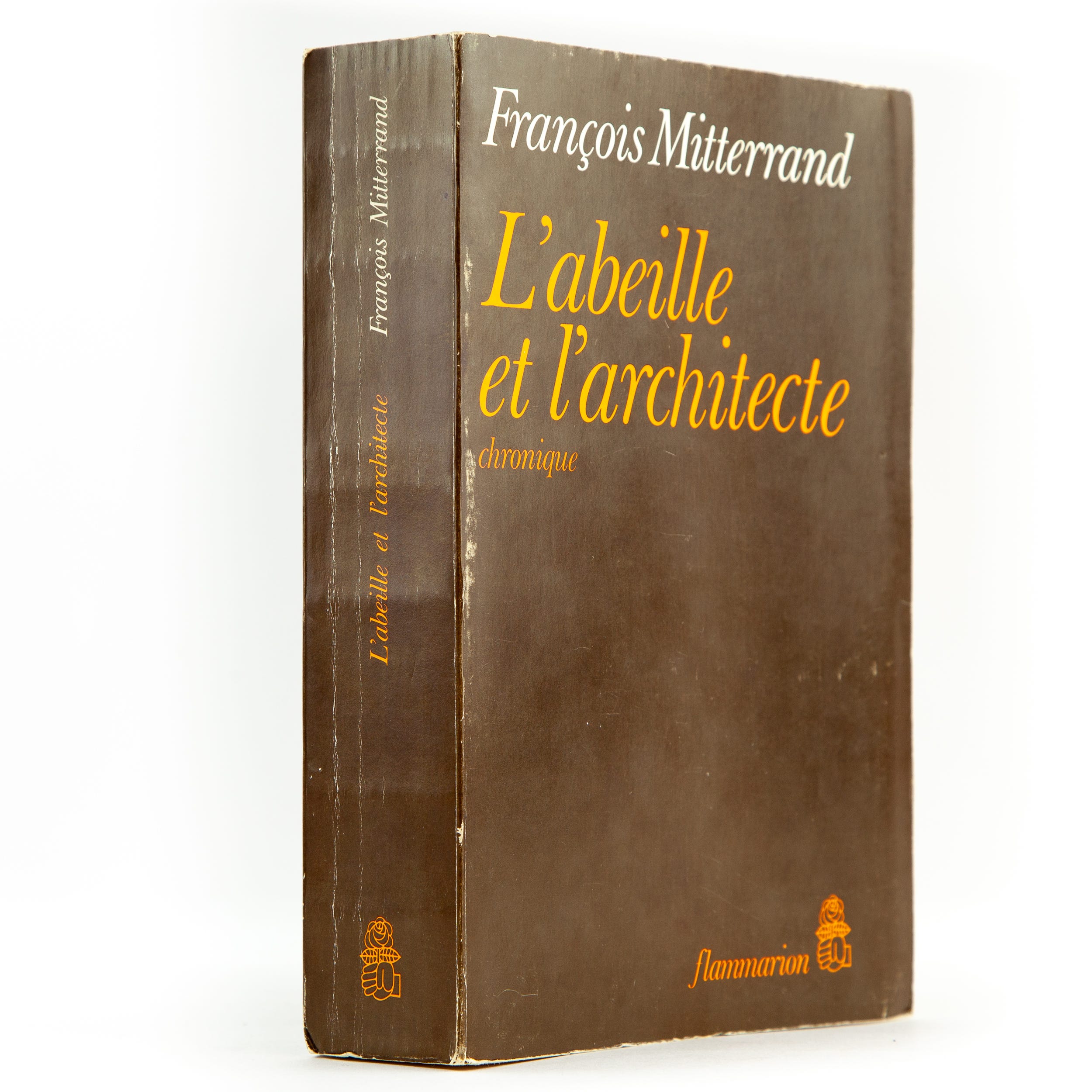
I first thought of Plato and political philosophy but I might say the book by french president François Mitterrand, L’abeille et l’architecte (translate as The wheat and the chaff and published by Seaver Books).
Oh, I’ve just received a call from the Élysée. They’re asking whether you would accept the role of Prime Minister. What do you say?
Yes. But I don’t have the ability for it.
I wish Senator Weber could come to the United States and teach a new flock of candidates how to be public servants. Who serve the public good. He-Who-Will-Not-Be-Named is a dangerous and demented puppet who cares only for himself. He's 180 degrees away from Senator Weber. Thank you for interviewing him.